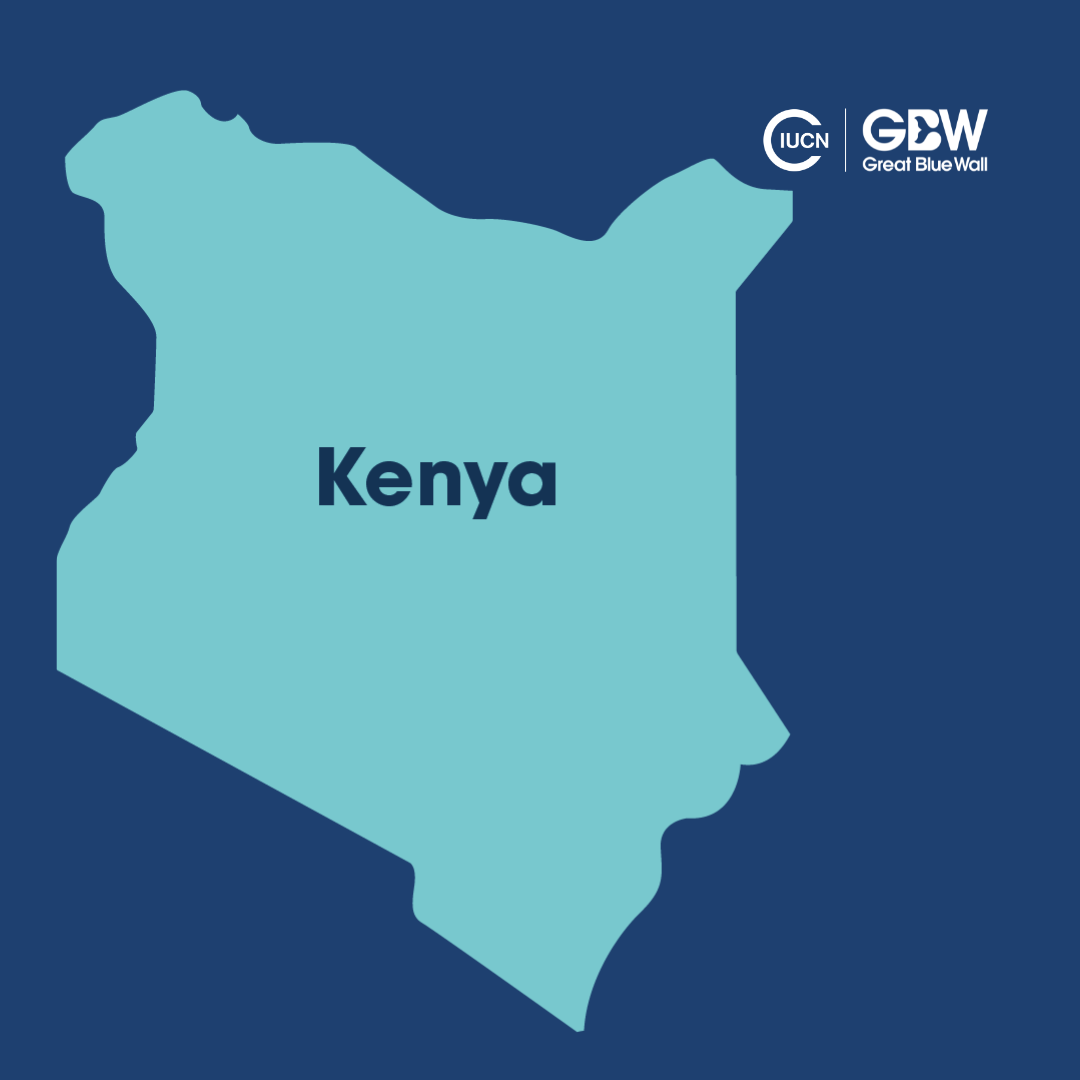


Kenya’s coastal ecosystems, spanning the Kilifi Seascape, are a critical focus of GBW efforts. Here, Locally Managed Marine Areas (LMMAs) have been strengthened across 15 sites using IUCN OECM criteria, with subnational climate and local development plans integrating mangrove conservation.
Government agencies, county authorities, NGOs, and local communities collaborate closely, with 500+ fishers and women’s groups actively participating in mangrove restoration, sustainable fishing, and ecotourism ventures. Partners include WWF-Kenya, Mombasa Marine Conservation Society, and regional networks such as WIOMSA. Through these partnerships, policy and practice are harmonized across scales, enabling measurable environmental and social outcomes.
The results are tangible: 10 LMMA sites now meet global OECM standards, 4,200 tonnes of plastic have been diverted, and 1,200 coastal livelihoods strengthened. Community-led octopus fishery closures in Lamu have increased adult biomass by 27% while improving fisher incomes, demonstrating GBW’s approach to balancing conservation, resilience, and economic growth.
Kenya
Kenya’s coastal ecosystems, spanning the Kilifi Seascape, are a critical focus of GBW efforts. Here, Locally Managed Marine Areas (LMMAs) have been strengthened across 15 sites using IUCN OECM criteria, with subnational climate and local development plans integrating mangrove conservation.
Government agencies, county authorities, NGOs, and local communities collaborate closely, with 500+ fishers and women’s groups actively participating in mangrove restoration, sustainable fishing, and ecotourism ventures. Partners include WWF-Kenya, Mombasa Marine Conservation Society, and regional networks such as WIOMSA. Through these partnerships, policy and practice are harmonized across scales, enabling measurable environmental and social outcomes.
The results are tangible: 10 LMMA sites now meet global OECM standards, 4,200 tonnes of plastic have been diverted, and 1,200 coastal livelihoods strengthened. Community-led octopus fishery closures in Lamu have increased adult biomass by 27% while improving fisher incomes, demonstrating GBW’s approach to balancing conservation, resilience, and economic growth.