

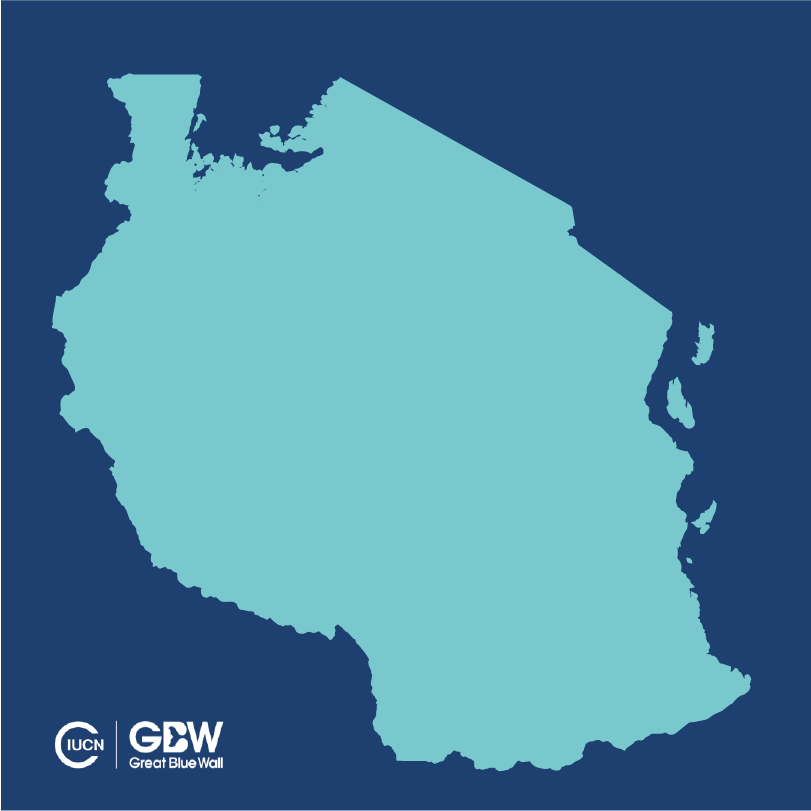
In Tanzania, the GBW supports both mainland and Zanzibar’s coastal and marine systems, through the Tanga-Pemba, Northern Unguja, Mafia and Mtwara Seascapes including mangroves, coral reefs, and seagrass beds. LMMAs are strengthened through governance frameworks that integrate climate adaptation and sustainable development goals. Initiatives like Bahari Mali establish ocean acidification monitoring, while the CRCC program enhances fishers’ livelihoods with cold-chain infrastructure. Plastic waste management and circular economy pilots further reduce environmental leakage and generate economic opportunities.
Collaboration spans government agencies, local communities, NGOs, and research institutions. Over 700 fishers, seaweed farmers, and women-led cooperatives are actively engaged, alongside partners such as TNC, WWF, WCS, Blue Ventures, and the Institute of Marine Sciences. This multi-stakeholder approach ensures that local knowledge, science, and policy coalesce to drive effective and inclusive coastal governance.
Impacts are already clear: 23 LMMAs strengthened, 2,500 tonnes of plastic diverted, 450 fishers’ livelihoods improved, and Tanzania submitted ocean acidification data to the UN for the first time under SDG 14.2. The Pemba-Tanga seascape exemplifies cross-border collaboration, where community-led management reduces ecological pressure while improving food security and adaptive capacity.
Tanzania
In Tanzania, the GBW supports both mainland and Zanzibar’s coastal and marine systems, through the Tanga-Pemba, Northern Unguja, Mafia and Mtwara Seascapes including mangroves, coral reefs, and seagrass beds. LMMAs are strengthened through governance frameworks that integrate climate adaptation and sustainable development goals. Initiatives like Bahari Mali establish ocean acidification monitoring, while the CRCC program enhances fishers’ livelihoods with cold-chain infrastructure. Plastic waste management and circular economy pilots further reduce environmental leakage and generate economic opportunities.
Collaboration spans government agencies, local communities, NGOs, and research institutions. Over 700 fishers, seaweed farmers, and women-led cooperatives are actively engaged, alongside partners such as TNC, WWF, WCS, Blue Ventures, and the Institute of Marine Sciences. This multi-stakeholder approach ensures that local knowledge, science, and policy coalesce to drive effective and inclusive coastal governance.
Impacts are already clear: 23 LMMAs strengthened, 2,500 tonnes of plastic diverted, 450 fishers’ livelihoods improved, and Tanzania submitted ocean acidification data to the UN for the first time under SDG 14.2. The Pemba-Tanga seascape exemplifies cross-border collaboration, where community-led management reduces ecological pressure while improving food security and adaptive capacity.